
 English
 日本語
日本語
 한국어
한국어
 简体中文
简体中文
 繁體中文
繁體中文
 Italiano
 español
 Deutsch
 Русский


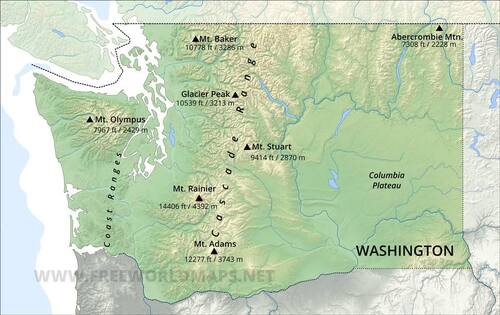
But where I live in Canada has a relatively good amount of snow & ice. We're in a dry, flat area of the country. Winds can swing from 0km/h to around 35-40 during the warmest parts of the day. It's also quick to cool down or warm up, depending on where the polar vortex is at the time.
Which is a long way of saying that Seattle almost never gets snow, and this area gets comparatively tons!
In the past few days, we've experienced a small-to-medium snowstorm where we averaged an estimated 25-35 cm of snow over the past couple of days. Which, for being a dry area, means that it's mosly lovely powder.
Shovelling the snow is almost impossible, since the winds keep picking up the snow & throwing it into the air. If you look outside the windows, the snow reveals all the different directions the winds blow as they go over & around houses & trees. It's kind of mesmerising.
Sadly, my & my spouses's place seems to get a lot of snow banked up against our back door, which is the door we use to get to our car. When my wife left for work today, she was climbing through snow that went to our knees!
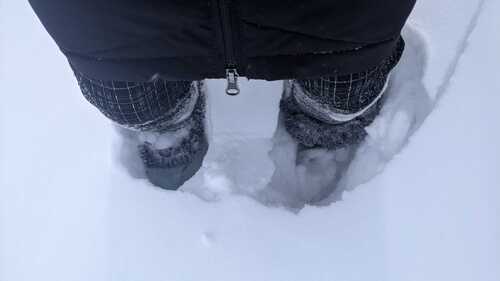
(It's a bit hard to see, but I'm as close to ground level as I can get, and the snow is up to my knees.)
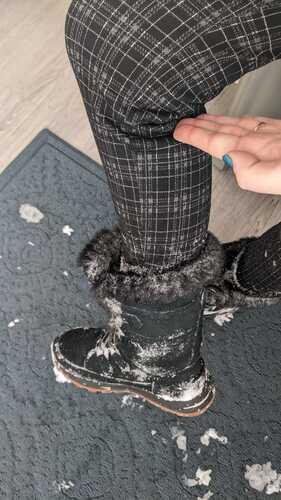
Which is unfortunate, since all of our boots let in just enough snow to make our pants damp around the calf. Thankfully, public buildings & houses have forced-air (or central air) heating, where hot air is distributed via air ducts & vented out in each room. So nobody inside is in danger of freezing.
However, to try and shovel some of the snow from our steps, where the snowbanks are highest, I had to venture out in the winds, fully protected from the snows.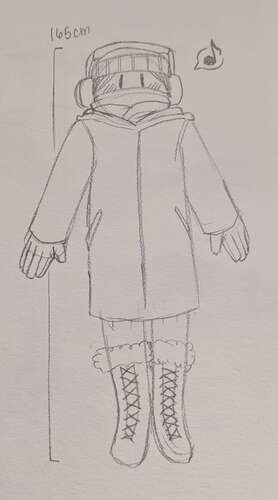
(Please enjoy my silly, 2 minute doodle.)
Folks here are used to temperatures dropping below -20C in the winter. The winds are annoying, but today hasn't touched the coldest day for even 2026. That was in January, when the wind dropped the temperature down to -43C.
But even with my mittens, coat, extremely long scarf acting also as a balaclava, beanie (touque in Canada), and special winter boots, I still got my knees to my boots soaked through.
The most dangerous part of this weather is if you are outside. Drivers must be especially wary, as the snow in the wind blocks visibility, making it difficult to see down the road. As such, people here slow down considerably. You also have to slow down & speed up more gently, increasing drive times.
Additionally, for those outside, you have to prepare to block the winds. Compared to the snow, which is powdery & dry, the wind can cut through any gaps in clothing & cause frostbite on areas that are exposed for too long.
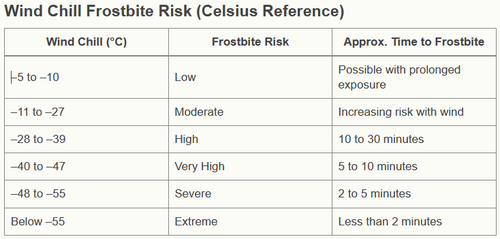
Since today's temperature with windchill is only -24C, we're not in danger of frostbite until the night, where it's expected to drop to -24C without windchill. At night, you've got only 30 minutes before you start to show frostbite symptoms, which is especially dangerous for unhoused individuals.




Comments (0)