
 English
 日本語
日本語
 한국어
한국어
 简体中文
简体中文
 繁體中文
繁體中文
 Italiano
 español
 Deutsch
 Русский


Every year around December 21st, the sun reaches its lowest point in the sky. This moment, known as the Winter Solstice, marks the shortest day and longest night of the year, and more importantly, the turning point when daylight begins to return.
For the Ancient Egyptians, the movement of the sun was carefully observed, precisely tracked, and in some cases, permanently built into the landscape.
(source)
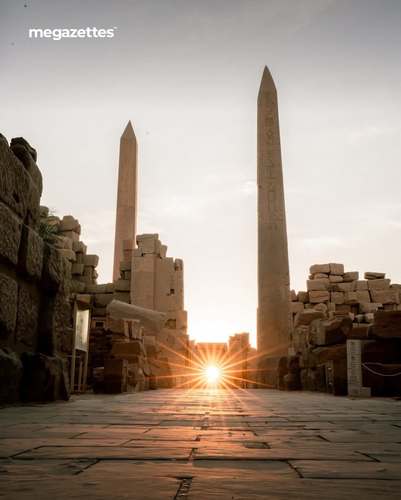
One of the clearest examples of this can be seen at Karnak Temple in Luxor.
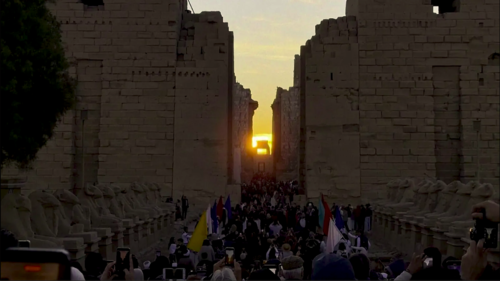
The main axis of the temple is aligned so that on the morning of the Winter Solstice, the rising sun shines directly along the central pathway, reaching deep into the temple’s inner spaces.
The main axis of the temple is aligned so that on the morning of the Winter Solstice, the rising sun shines directly along the central pathway, reaching deep into the temple’s inner spaces.
This alignment still happens today, and it’s why so many people gather at Karnak every December 21st to witness the event. (You can watch people gathering at yesterday’s sunrise alignment here.)
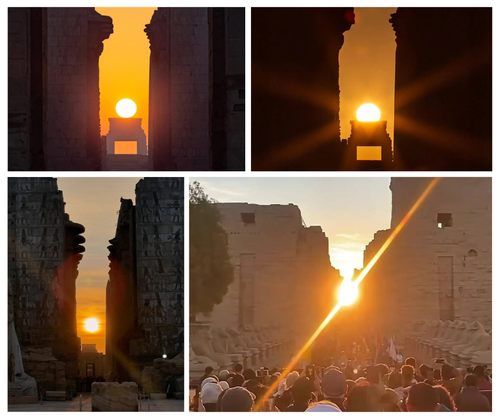
This phenomenon reflects the Egyptians’ deliberate understanding of seasonal change and the sun’s annual cycle. The solstice marked a moment of transition: the end of the sun’s weakest phase and the beginning of its gradual return.
Rather than relying on written calendars alone, they embedded time into stone, where temples functioned as seasonal markers, allowing sunlight to announce this change.
The sun entering the heart of a temple was a visible, undeniable sign that the cycle was continuing, that order (Ma'at) was maintained.
The sun entering the heart of a temple was a visible, undeniable sign that the cycle was continuing, that order (Ma'at) was maintained.
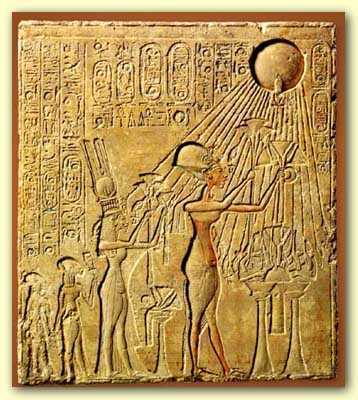
A depiction of Egyptian king Akhenaten and his family worshipping Aten (the sun disk).
While there is no solid evidence of a specific Winter Solstice festival with recorded rituals or celebrations in surviving texts, the solstice clearly held deep significance, as seen in the monuments designed to honor its arrival.
Standing at Karnak during this Solstice, watching sunlight travel along a path laid out thousands of years ago, marking the shift of the season, we witness a remarkable ancient regard and understanding of time, archeticture, and nature.
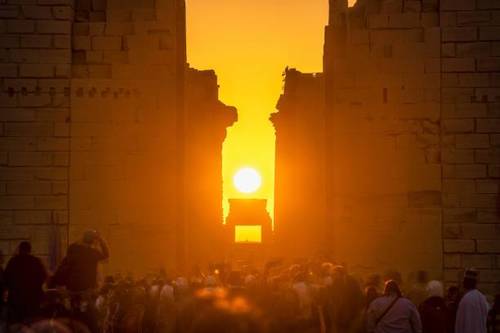
(source)
I always enjoy sharing both modern and ancient Egyptian culture and traditions, whether through my columns or my lessons.
I believe learning about different cultures is a wonderful way to broaden perspectives and gain a deeper understanding of the world.
If this is something that interests you, you're very welcome to explore my previous columns or book a lesson with me.



コメント (0)